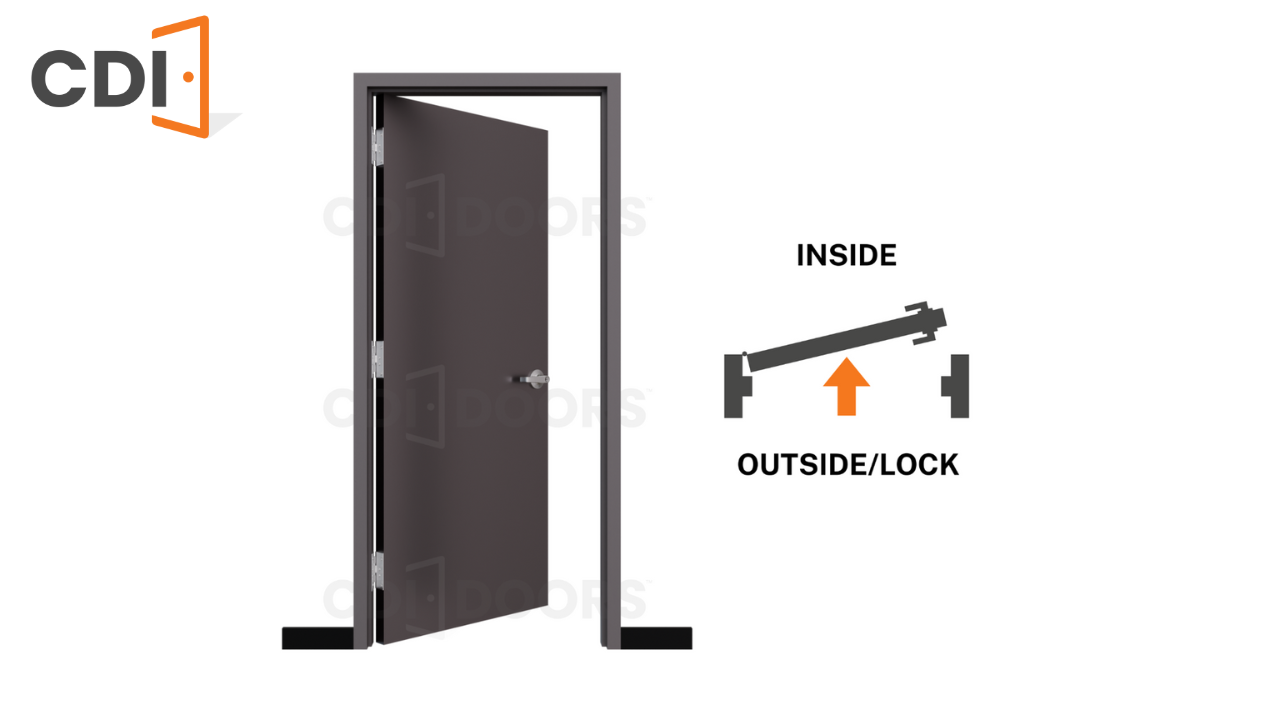
Need to determine a door’s swing direction? A door swing chart can help you identify if a door is left-handed, right-handed, and whether it swings in or out. This guide will show you how to use a door swing chart for accurate door ordering and installation. Download the complete door swing chart guide.
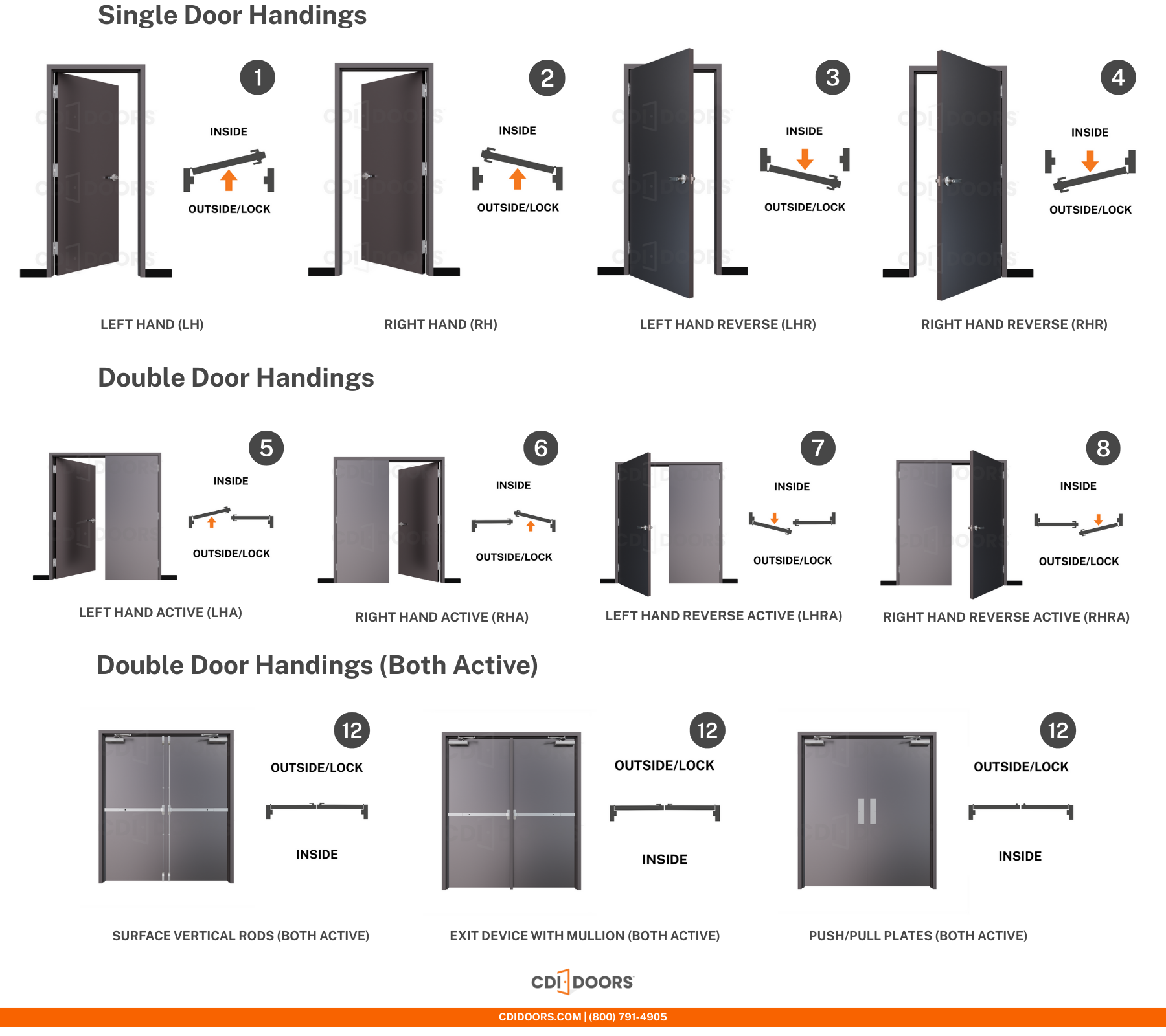
Mastering door swings begins with understanding how to use a door swing chart. This tool helps you determine if a door is left or right-handed and whether it swings inward or outward. Accurate identification ensures the correct hardware and proper fit for the intended space.
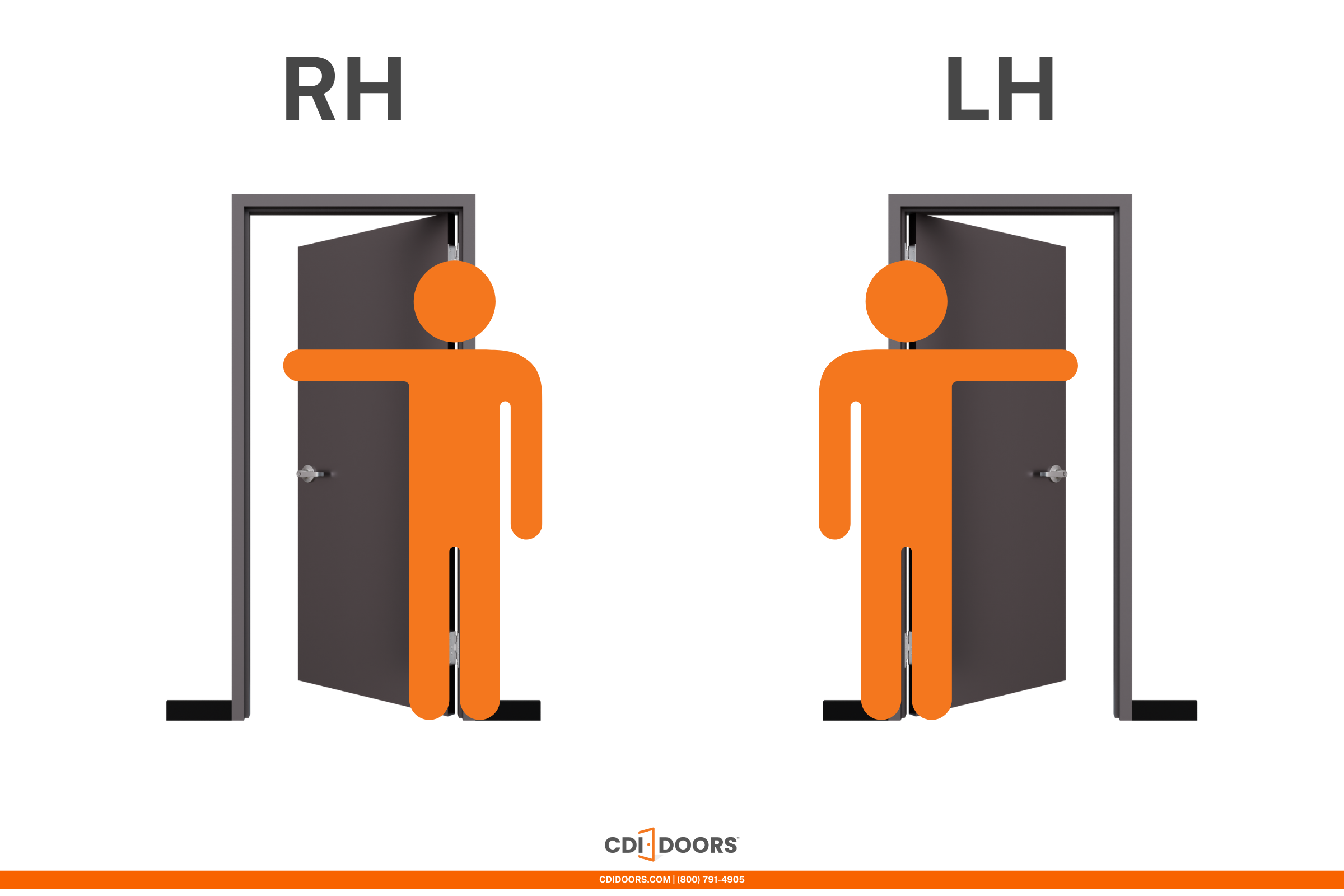
To identify the correct door swing, locate the hinges and position yourself with your back towards them, facing the door. If the doorknob is on your right, it’s a right-handed door; if on your left, it’s a left-handed door. This method ensures accurate determination of the door swing direction.
Getting this right impacts installation, usability, and safety. Whether dealing with inswing or outswing doors, or left hand outswing versus right hand outswing, the door swing chart is your essential guide.
For commercial doors, there are 13 standard handings (swings) used to describe how a door is hung and which way it swings. These are critical when ordering prehung doors, hardware, or specifying in architectural plans. The 13 door handings model isn’t from an official codebook or industry standard (like NFPA, IBC, or ANSI). Instead, it’s a practical framework developed by hardware suppliers, commercial door distributors, and contractors to simplify communication about handing for single doors, double doors with active/inactive leaves, reversible swing, specialty double door scenarios. The most popular door types these door handings apply to are commercial metal doors, commercial wood doors, and commercial storefront doors.
Single Door Handings (1–4) & Double Door Handings (5–13)
Inswing and outswing doors are fundamental concepts in door handing. Inswing doors open inward, ideal for areas with limited exterior space. Conversely, an outswing door opens outward and is preferred in regions with harsh weather conditions due to its tighter seal against drafts. Knowing these differences is crucial when choosing a door for your space.
Inswing doors are particularly useful for maximizing interior space as they swing towards the nearest wall, allowing for more open space inside the room while entering the area. This makes them a popular choice for interior doors in homes and offices.
Conversely, outswing doors, with their robust sealing capabilities, are favored for exterior doors, especially in areas prone to strong winds and heavy rain. When installing any door, considering the swing direction is essential to ensure it fits well within the space and meets the functional needs of the room.
Door handings come in various configurations, each serving a specific door purpose and applications that are generally considered crucial for selecting the right means door for your needs.
There are 13 standard door handings used in commercial settings, developed by hardware suppliers and commercial door distributors to provide a practical framework for door installation.
This section explores common door handings, including Left Hand (LH), Right Hand (RH), Left Hand Reverse (LHR), and Right Hand Reverse (RHR), as well as configurations for double doors like Double Egress and Unequal Leaf Pair.
Left Hand (LH) and Right Hand (RH) doors are straightforward configurations. In an LH door, hinges are on the left, allowing the door to swing inward from the left, commonly used in settings where the door opens into the room without obstructing the space.
RH doors have hinges on the right side and swing inward from the right. This type of handing is equally popular and chosen based on the space’s layout and design.
Both LH and RH doors enhance functionality and flow, ensuring the door does not interfere with the interior layout.
Left Hand Reverse (LHR) and Right Hand Reverse (RHR) doors swing outward, offering different benefits. LHR doors have hinges on the left and swing outward towards the viewer, often used in spaces where inward swinging doors are impractical, such as narrow hallways or areas with limited interior space.
RHR doors have hinges on the right side and swing outward away from the viewer. This handing is beneficial in emergency exits and other situations requiring quick and unobstructed egress. Both LHR and RHR doors offer unique advantages based on the specific needs of the space.
Understanding door handing is crucial for ensuring the functionality and safety of doors within various settings. In commercial buildings, building codes often dictate door swing direction to ensure safety and accessibility during emergencies.
Here are some real world use cases for the door swings and typical applications:
Correctly identifying door handing requires help to avoid ordering the wrong door, which can lead to costly installation issues and returns on the secure side. Additionally, it is important to ensure that the doors are secure.
Understanding door swings and handings is essential for ensuring the functionality, safety, and aesthetic appeal of doors in any setting. From using a door swing chart to determining door handing from outside, and understanding various configurations like LH, RH, LHR, RHR, Double Egress, and Unequal Leaf Pair, this guide provides comprehensive knowledge to make informed decisions. Accurate door handing enhances the overall experience, ensuring doors fit well and operate smoothly in their designated spaces.
To determine the handing of a door from the outside, stand with your back to the hinges; if the doorknob is on your right, it is a right-hand door, and if it is on your left, it is a left-hand door.
Inswing doors open inward and are ideal for interior spaces, whereas outswing doors open outward, offering better seals against drafts and adverse weather conditions. Typically where the keyside of a lock or main point of entry is, that would be where the outside of the opening is.
Double Egress doors are specifically designed to swing away from each other, facilitating access from both sides, and are typically used in corridors or emergency exit paths.
It is essential to use a handing chart when ordering doors to ensure accuracy and prevent installation complications and extra expenses from incorrect orders.